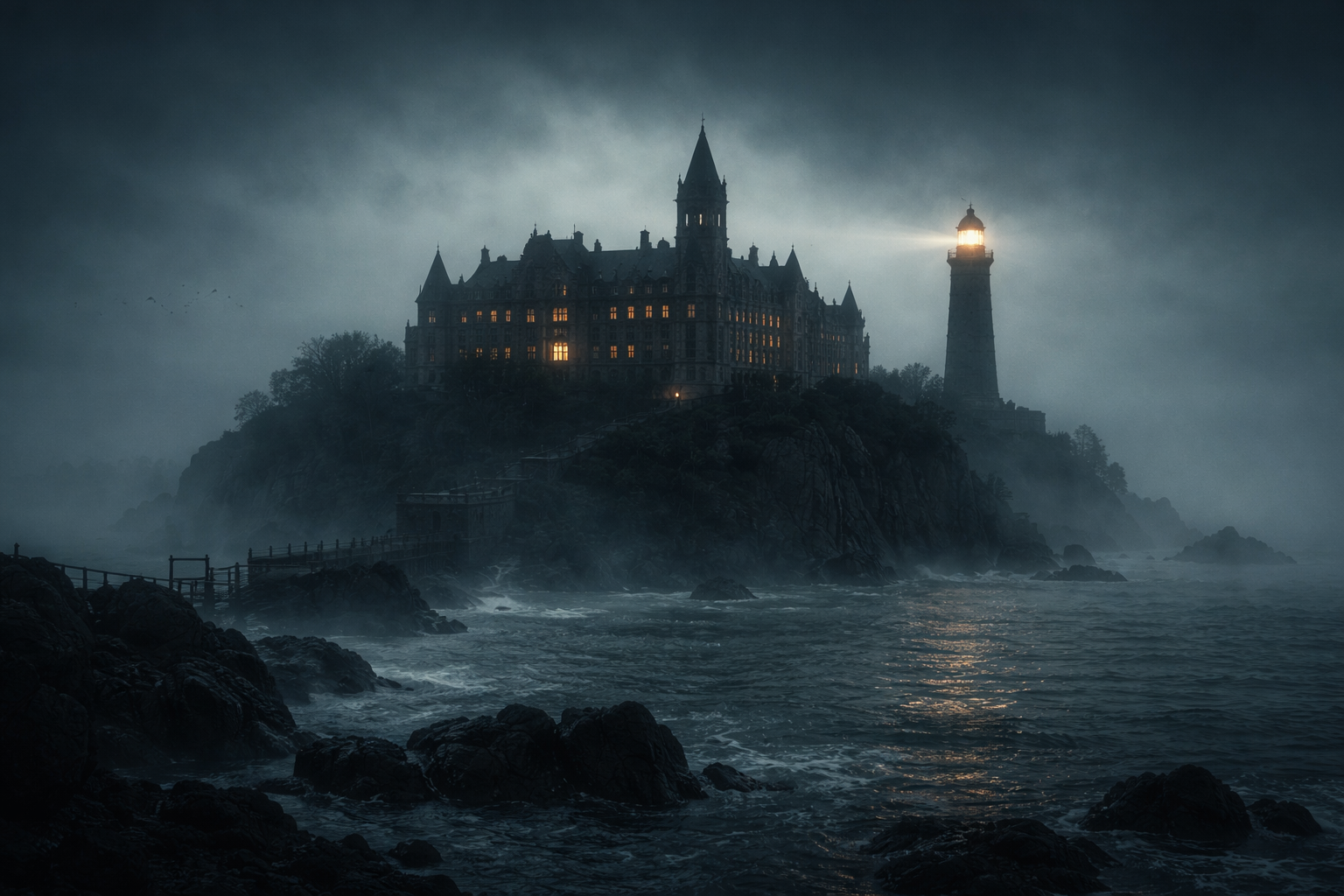
Psychological horror like Shutter Island pulls you in with mystery—then punishes you with doubt.
That’s the magic of this flavor of horror.
It doesn’t scream. It whispers, repeats itself, and makes you question the one thing you rely on most: your perception.
If you love psychological horror like Shutter Island, you’re not just chasing scares. You’re chasing a specific feeling—being trapped inside a story that won’t let you trust what you know.
This post breaks down what creates that “reality collapse” effect, how to spot it in books, and why Dark Lullaby fits readers who crave slow, intimate dread.
Table of Contents
What “psychological horror like Shutter Island” means
Psychological horror works by destabilizing what the reader believes is real.
Instead of relying on gore or nonstop action, it uses atmosphere, uncertainty, and pressure to create dread that feels personal.
For a quick genre overview, see Psychological horror (Wikipedia). For a simple definition of the technique behind many of these stories, see Unreliable narrator (Wikipedia).
In other words: the fear comes from not knowing if the danger is outside the character… or inside them.
Psychological horror like Shutter Island: 7 disturbing traits
1) A setting that feels like a trap
Islands, clinics, locked routines, remote buildings—these settings don’t just look creepy.
They remove options, which makes every decision feel desperate.
2) Authority that can rewrite your reality
The most brutal stories include people or systems that can label you “wrong.”
Once that happens, even the truth feels fragile.
3) Memory gaps that behave like haunted rooms
Missing time is terrifying because you can’t defend what you can’t remember.
Your mind becomes a place you can’t fully enter.
4) Repetition that starts to feel intentional
A phrase, a song, an object, a hallway—repetition turns atmosphere into a warning.
It makes readers think, “Someone wants me to notice this.”
5) Evidence that doesn’t match the story
Small contradictions create big fear.
When details don’t align, reality feels like it’s cracking.
6) A slow-burn tension that tightens instead of exploding
This style thrives on pressure.
Each scene adds weight until the reader feels cornered, even in silence.
7) An ending that re-colors the entire experience
The best psychological horror doesn’t just reveal.
It reframes—making you rethink what you assumed earlier.
Why Dark Lullaby fits readers who want this vibe
Dark Lullaby leans into uncertainty, emotional pressure, and an institutional atmosphere where control and care can blur.
It’s not built on loud scares. It’s built on doubt that keeps returning.
If you want the deeper craft angle, connect this with our internal posts:
- Unreliable Narrator Horror Explained
- Why Psychiatric Hospital Horror Feels Claustrophobic
- Sleep Paralysis Horror Book Guide
Want to preview the tone first?
Start here: Read a sample chapter. If it hooks you, continue here: Get the full book.
How to read psychological horror like Shutter Island for maximum dread
This style rewards attention.
If you rush, you miss the quiet contradictions that make the fear bloom.
- Read in short sessions (1–3 chapters). Stop while the tension is rising.
- When something repeats, pause. Ask yourself why it returned.
- Don’t skim “calm” scenes. Calm is where the threat hides.
- If you’re sensitive to sleep disruption, avoid reading right before bed.
For a grounded view on how stress can change perception, the APA has a good starting point here: APA: Stress.
Quick FAQs
Is this the same as a thriller?
Sometimes it overlaps, but the goal is different.
Thrillers chase answers. Psychological horror makes you fear what the answers might mean.
Is this gore-heavy?
Not necessarily. The fear comes from uncertainty, atmosphere, and mental pressure.
Where should I start on this site?
Start with /read-sample/. If you want the full experience, go to /dark-lullaby/.
Psychological horror like Shutter Island works because it doesn’t ask, “What’s the monster?”
It asks, “What if you can’t trust your own certainty?”