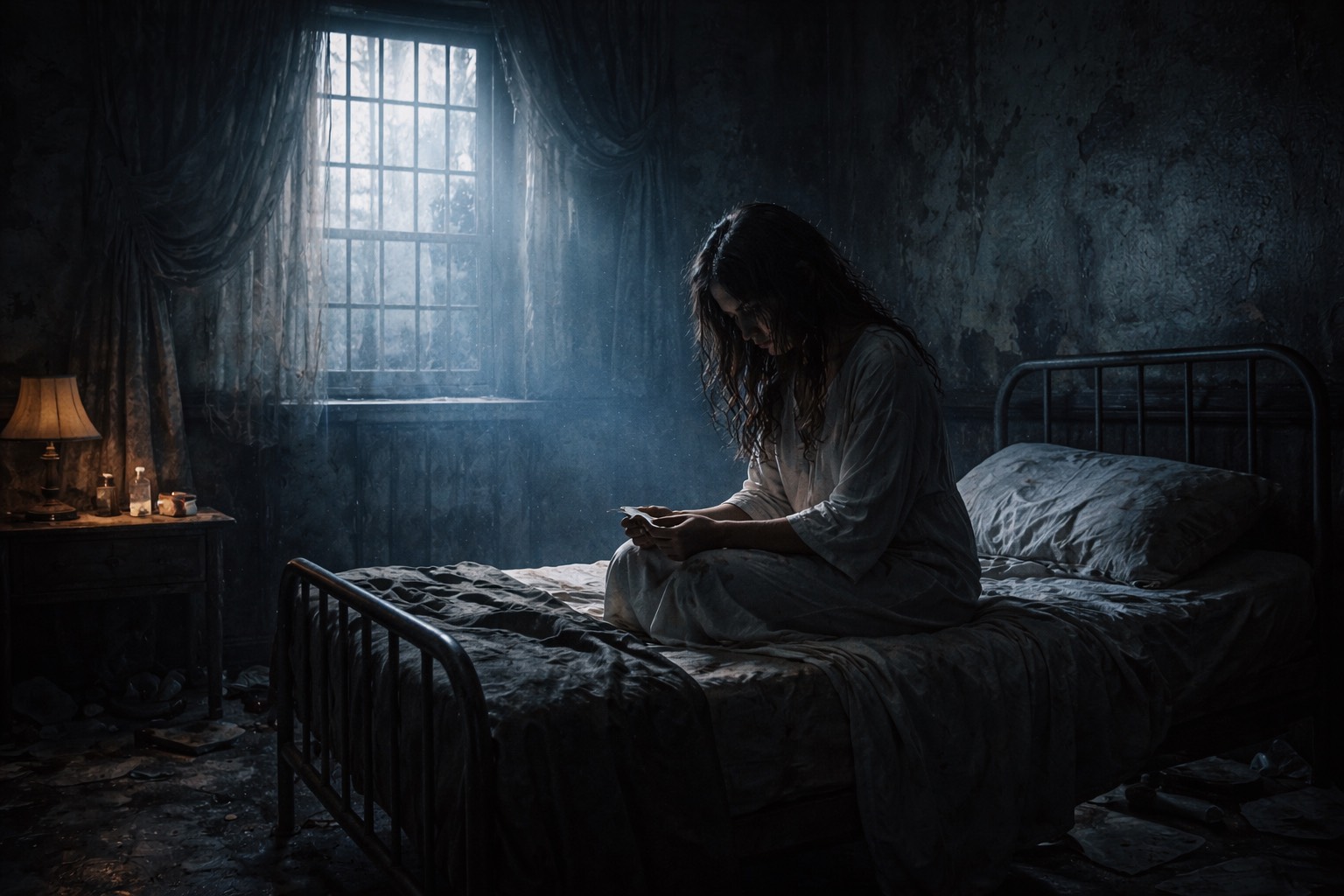
Haunted clinic horror novel stories don’t just scare you—they corner you.
A haunted house gives you a front door. A clinic gives you rules.
That’s why this subgenre hits harder: the walls aren’t just physical. They’re procedural, monitored, and “for your own good.”
This post breaks down what makes a haunted clinic horror novel feel brutally real, and why Dark Lullaby belongs in your next reading session.
Table of Contents

Why a haunted clinic horror novel feels inescapable
In psychological horror, fear often comes from uncertainty—what’s real, what’s imagined, what’s remembered wrong. A clinic setting adds a second layer: authority.
In a clinic, your fear can be dismissed, documented, medicated, or explained away. That dynamic creates dread without needing constant action.
If you want a quick definition of psychological horror as a genre, start with this overview: Psychological horror (Wikipedia).
Haunted clinic horror novel: 8 savage truths
1) Doors don’t open on your schedule
Locked doors are classic horror. Here, they’re justified. That’s worse.
2) Routine becomes a cage
Meals, checks, lights-out—predictability stops feeling safe and starts feeling controlled.
3) Observation turns into paranoia
Even normal attention becomes suspicious when you can’t opt out of being watched.
4) Your reality can be “corrected”
In this setting, doubt isn’t just internal. It’s reinforced from the outside.
5) Silence becomes loud
Quiet corridors, distant carts, a door click—small sounds land like threats.
6) Help can feel dangerous
Care and control can look identical, which makes every interaction tense.
7) Memory becomes unreliable
When your mind is exhausted, details slip. Horror loves that slip.
8) The worst fear is being believed too late
Clinic horror often builds to a point where proof exists—but timing is cruel.
How Dark Lullaby uses clinic-dread (spoiler-free)
Dark Lullaby leans into institutional claustrophobia and fractured certainty. The fear is intimate and persistent, not loud and instant.
If you want the craft angle, pair this post with our internal guides:
Want to preview the tone first? Start here: /read-sample/. If it hooks you, continue here: /dark-lullaby/.
What to read next
If you liked this, you’ll also enjoy our post on sleep-based dread: Sleep paralysis horror book guide.
For a grounded perspective on how stress can affect perception, the APA has a useful starting page: APA: Stress.
A haunted clinic horror novel works because it weaponizes the most frightening idea of all: you’re trapped, and the system says it’s for your safety.